How Many Solar Panels Do I Need to Power a House in Maine?
Own Your Solar or Subscribe to a Solar Farm? What Maine Property Owners Should Know
August 24, 2026
How Many Solar Panels Do I Need to Power a House in Maine?
Updated August 2026
For many Maine homes, the answer may be somewhere around 15–25 solar panels, but the real number depends much more on how much electricity you use than on the size of your house.
Two homes that look almost identical from the road can need very different solar systems. One might heat with oil and use relatively little electricity, while the other has heat pumps, an electric water heater, an EV and a family of five.
The best place to start is your electric bill.
How Do You Calculate How Many Solar Panels You Need?
The basic idea is simple: the more electricity your household uses each year, the more solar production you'll need to offset it.
From there, factors like panel wattage, available sunlight, orientation and shading determine how many panels are required to produce that electricity.
That's why simply asking, "How many panels does a 2,000-square-foot house need?" doesn't give you a very useful answer.
How Much Electricity Does the Average Maine Home Use?
According to the U.S. Energy Information Administration, Maine residential customers used an average of about 550 kWh per month in 2024, or roughly 6,600 kWh per year.
That statewide average is useful as a reference point, but it can be misleading for an individual household.
A Maine home with oil heat and no electric vehicle may use substantially less electricity than a home running multiple heat pumps, electric hot water and an EV.
That's why we recommend looking at your last 12 months of actual electricity use instead of sizing a solar system from a statewide average.
What About a Maine Solar Shed?
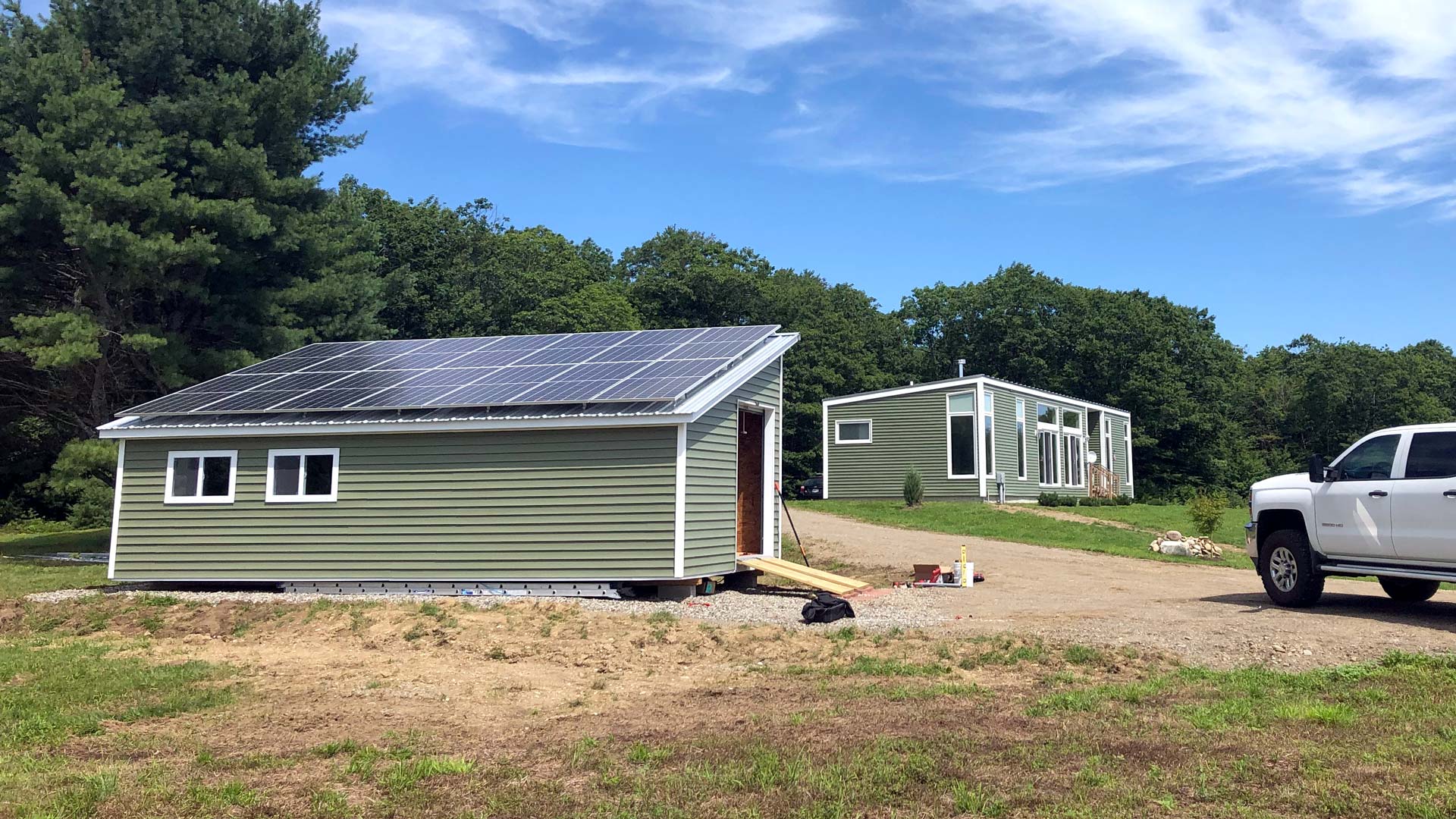
A typical Maine Solar Shed model can produce approximately 12,800 kWh of electricity per year, depending on the model and site conditions.
That's considerably more than the statewide residential-use average, which means a solar shed can potentially offset the electricity needs of homes with higher-than-average consumption.
That may include households using electricity for:
- Heat pumps
- Electric water heating
- EV charging
- Workshops or outbuildings
- Home businesses
- Pools or hot tubs
The goal isn't to install as many panels as possible. It's to design a system that makes sense for how your property actually uses electricity.
Does a Bigger House Need More Solar Panels?
Not necessarily. Square footage is a poor predictor of electricity use. A large Maine farmhouse heated with oil may use less electricity than a smaller, highly electrified home with several heat pumps and an EV. What matters is the number on your electric bill: how many kilowatt-hours you use over the course of a year.
Should Solar Cover 100% of Your Electricity Use?
Not always. Some homeowners want to offset as much of their annual electricity consumption as possible. Others prefer a smaller system because of budget, available space or future energy plans.
You should also think about what your electricity use may look like five or ten years from now. Are you considering adding heat pumps, buying an electric vehicle, switching to an electric water heater, adding a workshop or building an addition?
If so, some of that future electricity use should be part of the conversation when designing your system.
What Else Determines How Many Panels You Need?
Annual electricity use is only one part of the equation. A solar designer will also look at:
Sun Exposure
A system with excellent sun exposure may produce more electricity than an equally sized system with partial shade.
Orientation
Panels positioned toward the best available solar exposure can improve annual production.
Shading
Trees, buildings and other obstructions can materially affect solar output.
Panel Wattage
Higher-wattage panels can generate more power per panel, potentially reducing the total number required.
Available Space
Your existing roof may limit system size. A purpose-built solar shed gives you another option when rooftop space, orientation or condition isn't ideal.
How Do I Know Exactly How Many Solar Panels My Maine Home Needs?
Pull your last 12 months of electric bills and find your total annual kilowatt-hour usage. That's the best starting point.
From there, a solar assessment can account for your property, sunlight, system design and future energy needs to determine how many panels actually make sense. There's no benefit to guessing.
Bottom Line
For many Maine homes, roughly 15–25 modern solar panels may be enough to offset a substantial portion of annual electricity use. But there is no universal number.
The right system depends on your annual electricity consumption, panel wattage, sun exposure and shading, system orientation, available space and future electricity needs. The most accurate answer starts with your actual electric usage, not the square footage of your house.
FAQ: Solar Panel Sizing in Maine
How many solar panels does the average Maine home need?
Many Maine homes may need roughly 15–25 modern panels, but actual requirements depend on annual electricity use, panel wattage and site conditions.
How do I calculate how many solar panels I need?
Start with your total electricity consumption for the last 12 months. Your solar installer can then determine the system size needed to produce a similar amount of electricity under your site's conditions.
Can solar power my entire house in Maine?
It can. Whether a system can offset all of your annual electricity use depends on your consumption, available solar exposure and the size of the system that can be installed.
Do I need more solar panels if I use heat pumps?
Potentially. Heat pumps increase electricity consumption, so homes relying heavily on them may require a larger solar system than homes heated primarily with oil, propane or wood.
How much electricity does a Maine Solar Shed produce?
A typical Maine Solar Shed model can produce approximately 12,800 kWh per year, although actual production varies by model and site conditions.
About Maine Solar Sheds
Written by Maine Solar Sheds
Maine Solar Sheds was founded by Matt and his team, who bring over 30 years of experience in Maine's solar industry. Over the decades, they've built roof-mounted systems, concrete ground-mounted arrays and steel ground-mounted installations across the state.
Since developing the Maine Solar Shed, Matt and his team have come to see how often a purpose-built solar structure is the best long-term solution, offering optimized solar production, snow management, durability and additional functional space for Maine property owners.