Solar Panel Cost in Maine: What Homeowners Should Know

How Many Solar Panels Do I Need to Power a House in Maine?
August 24, 2026
Solar Installation Options in Maine: Compare 5 Choices
October 23, 2026
How Much Does It Cost to Install Solar Panels in Maine?
If you've been thinking about switching to solar, one big question probably stands between you and taking the next step: How much will it cost?
It's a fair question. Solar is a significant investment, and Maine homeowners want to know what they're getting for their money.
The answer depends on more than just how many solar panels you need. Your property's layout, electricity use, installation method, and even your roof's condition can affect the final price.
Here's what goes into the cost of installing solar panels in Maine and what you should consider before requesting a quote.
What Determines the Cost of Solar Panels in Maine?
There isn't one standard price for a residential solar installation. Two homes with similar electricity bills could have very different installation costs.
Here are some of the biggest factors.
1. How Much Electricity You Use
The more electricity your household uses, the larger the solar system you may need.
A home that relies on oil for heating and doesn't have an electric vehicle may need considerably less electricity than a home with multiple heat pumps, an electric water heater, and two EVs in the driveway.
The best place to start is with your electric bills. Looking at your electricity use over the last 12 months gives a solar installer a much better picture of your needs than your home's square footage alone.
2. Where the Panels Will Be Installed
Most people picture solar panels mounted on their roof, but that's not the only option.
You can also install solar panels on ground-mounted structures or purpose-built buildings, like solar sheds.
Each approach has different costs.
Rooftop solar uses an existing structure, which can make it an economical option when the roof is in good condition and receives plenty of sunlight.
Ground-mounted systems require their own support structures and site preparation, but offer more placement flexibility.
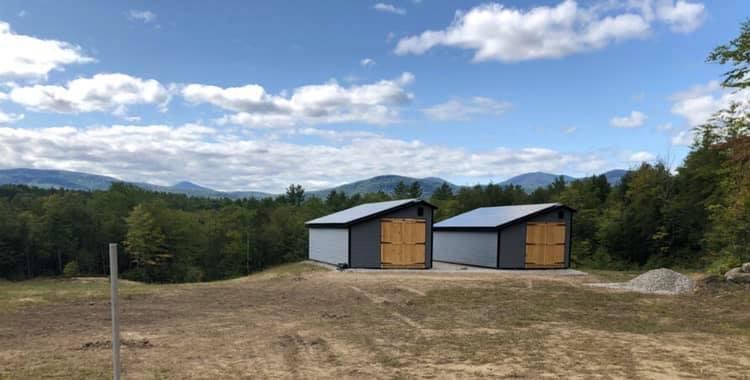
Solar sheds combine the solar installation with a functional building, providing storage or workspace in addition to electricity generation.
The least expensive option upfront isn't necessarily the best long-term investment for every property.
3. Your Property's Layout
A sunny, open property is generally easier to work with than one surrounded by mature trees.
Shading, distance from the electrical connection, ground conditions, and available installation space can all affect a system's design and cost.
In Maine, site conditions can vary quite a bit. A solar installation on an open field in central Maine may look very different from one on a wooded lakeside property.
4. Additional Equipment
A standard grid-connected solar installation generally includes panels, mounting equipment, an inverter, wiring, and electrical safety equipment.
Some homeowners also choose battery storage to provide backup electricity during outages.
Batteries add to the upfront cost, but they can be useful for properties where backup power is a priority.
It's important to understand that solar panels alone generally won't keep your home powered during a grid outage. Backup operation requires equipment specifically designed and configured for that purpose.
What About Solar Tax Credits and Incentives in Maine?
Solar incentives have changed in recent years.
The federal Residential Clean Energy Credit, which previously provided a 30% tax credit for qualifying residential solar installations, is no longer available for systems placed in service after December 31, 2025.
However, Maine homeowners may still benefit from net energy billing.
Under Maine's net energy billing program, eligible solar customers can receive electricity bill credits for qualifying excess energy sent to the grid. Those credits can offset electricity use when the home needs more power than the solar system produces.
The exact financial benefit depends on your utility, system production, electricity use, and applicable program rules.
When comparing solar quotes, make sure any savings projections reflect current programs rather than expired incentives.
How Much Money Can Solar Panels Save?
This is where the conversation gets interesting.
While the upfront cost of solar can be substantial, your system's electricity production will reduce how much electricity you need to buy from your utility.
Consider a hypothetical solar system producing 10,000 kilowatt-hours annually.
If each kilowatt-hour of solar production offsets 25 cents in electricity costs, that represents approximately $2,500 in annual electricity value.
That's an illustration, not a guaranteed savings figure. Actual savings depend on your electric rate, usage patterns, utility billing rules, and system performance.
Over time, those savings can help recover the initial installation cost.
Solar panels are also a long-term investment. Many systems are designed to produce electricity for 25 years or longer, although components may require maintenance or replacement during that period.
Is a Solar Shed More Expensive Than Rooftop Solar?
A solar shed includes something a conventional rooftop installation doesn't: a building.
That means you're paying for both a solar energy system and usable space.
If you already have a newer, sunny roof and don't need extra storage, rooftop solar may be the more economical choice.
But if you're already considering building a garage, workshop, or storage shed, combining that project with solar is definitely worth exploring.
A purpose-built solar shed can also offer flexibility in panel placement without requiring work on your home's existing roof.
The key is to compare the total value of each project, not just the cost of the panels.
How to Get an Accurate Solar Estimate
Before requesting a quote, gather a few pieces of information:
- Your last 12 months of electricity usage
- Any plans to add heat pumps, electric vehicles, or other major electrical equipment
- The age and condition of your roof
- Areas of your property that receive good sunlight
- Whether you need additional storage, workspace, or backup power
A qualified solar professional can use this information to help determine which system makes sense for your property.
Is Solar Worth the Investment in Maine?
For many homeowners, solar can be a practical way to reduce long-term electricity expenses. But the numbers need to work for your particular property.
Instead of choosing a system based on the lowest advertised price, consider how much electricity it will produce, how much of your bill it can offset, what maintenance it may require, and whether it meets your needs for years to come.
At Upright Energy, we've spent decades working with solar energy in Maine. Our Maine Solar Sheds offer another approach to residential solar, combining electricity generation with useful storage or workspace.
Curious whether a solar shed could work for your property? Explore our Maine Solar Sheds or contact our team to discuss your options.
Frequently Asked Questions
How much does it cost to install solar panels in Maine?
The cost of installing solar panels in Maine depends on system size, electricity usage, installation location, equipment, and site conditions. Rooftop, ground-mounted, and solar shed installations have different cost considerations. A customized estimate is the best way to determine the cost for your property.
Are there solar tax credits available in Maine in 2026?
The federal Residential Clean Energy Credit is no longer available for qualifying residential systems placed in service after December 31, 2025. However, eligible Maine homeowners may still benefit from net energy billing, which provides electricity bill credits for qualifying solar generation. Program eligibility and financial benefits vary.
Can solar panels eliminate my electric bill?
A properly sized solar system can offset a significant portion of your electricity usage, but it may not eliminate your bill entirely. Utility charges, seasonal production, electricity consumption, and net energy billing rules all affect the amount you pay.
How long does it take for solar panels to pay for themselves in Maine?
Solar payback depends on the installation cost, annual electricity production, utility rates, and applicable billing credits. To estimate payback, compare the net cost of your system with its projected annual financial savings, accounting for maintenance and other expenses.
Is a solar shed more expensive than rooftop solar?
A solar shed includes both a solar energy system and a functional building, so its upfront cost may be higher than a comparable rooftop installation. However, homeowners who also need storage or workspace may find value in combining those investments. The best comparison considers total project costs and benefits.