Solar Installation Options in Maine: Compare 5 Choices

Solar Panel Cost in Maine: What Homeowners Should Know
October 23, 2026
What Are Your Options for Installing Solar Panels in Maine?
When most people think about putting solar panels on their home, they picture panels covering the roof.
And while rooftop solar is a popular choice, it's far from the only way to generate your own electricity.
Depending on your property, energy needs, and budget, there may be several ways to make solar work. Some don't require putting a single panel on your house.
Let's look at the most common solar options available to Maine homeowners and what makes each one worth considering.
1. Rooftop Solar: The Traditional Approach
Rooftop solar is what most homeowners know.
Solar panels are mounted directly onto an existing roof, where they capture sunlight and convert it into electricity.
For homes with a relatively new roof, good sun exposure, and enough usable space, rooftop solar can be a practical option.
Things to consider:
Your roof's age matters. If you will need to replace it in the next few years, installing solar now could mean paying to remove and reinstall the panels later.
Orientation and shading also matter. A roof that receives direct sunlight for much of the day may be a good candidate, while one surrounded by tall pines could be more challenging.
Although rooftop solar can work on roofs facing different directions, electricity production will vary depending on the installation.
2. Ground-Mounted Solar: More Flexibility in Placement
What if your roof isn't ideal for solar, but you have plenty of open land?
Ground-mounted solar panels may be an option.
Instead of attaching panels to your house, installers build a separate support structure on your property.
This allows greater flexibility in choosing the direction and angle of the panels.
Ground-mounted systems can be particularly useful for properties with open fields or areas that receive more sunlight than the roof.
Things to consider:
These systems require dedicated outdoor space. They may also need site preparation, foundations, trenching, and additional wiring.
Depending on the property, those requirements can make ground-mounted solar more expensive than a straightforward rooftop installation.
You'll also want to consider how the installation affects your yard, landscaping, and future use of the property.
3. Solar Sheds: Electricity Generation With a Practical Purpose (Our Pick)
Here's an option many Maine homeowners haven't considered.
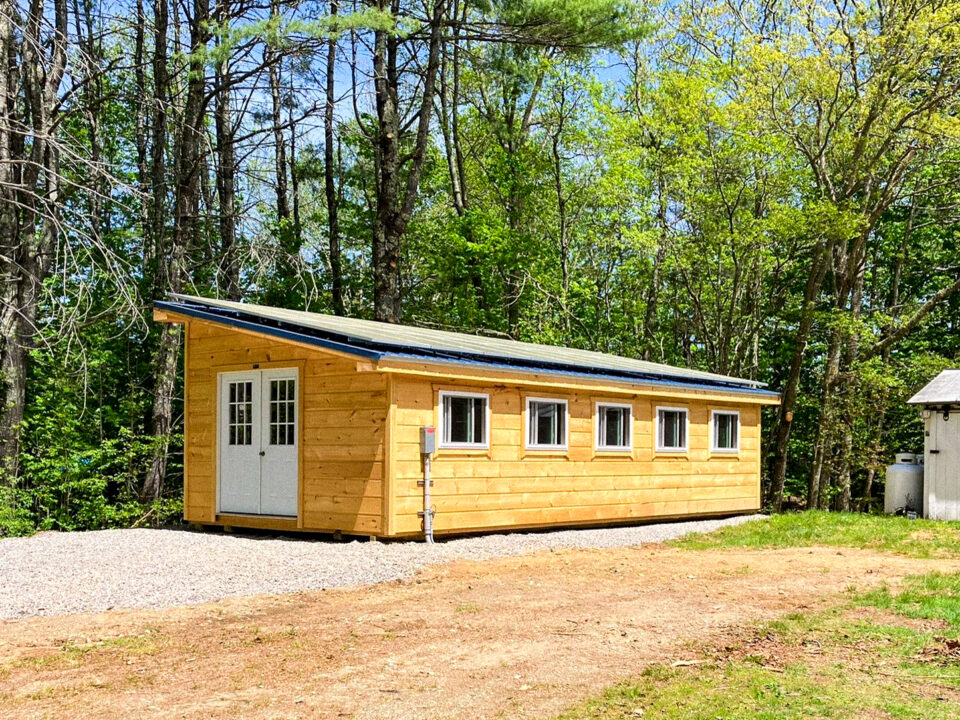
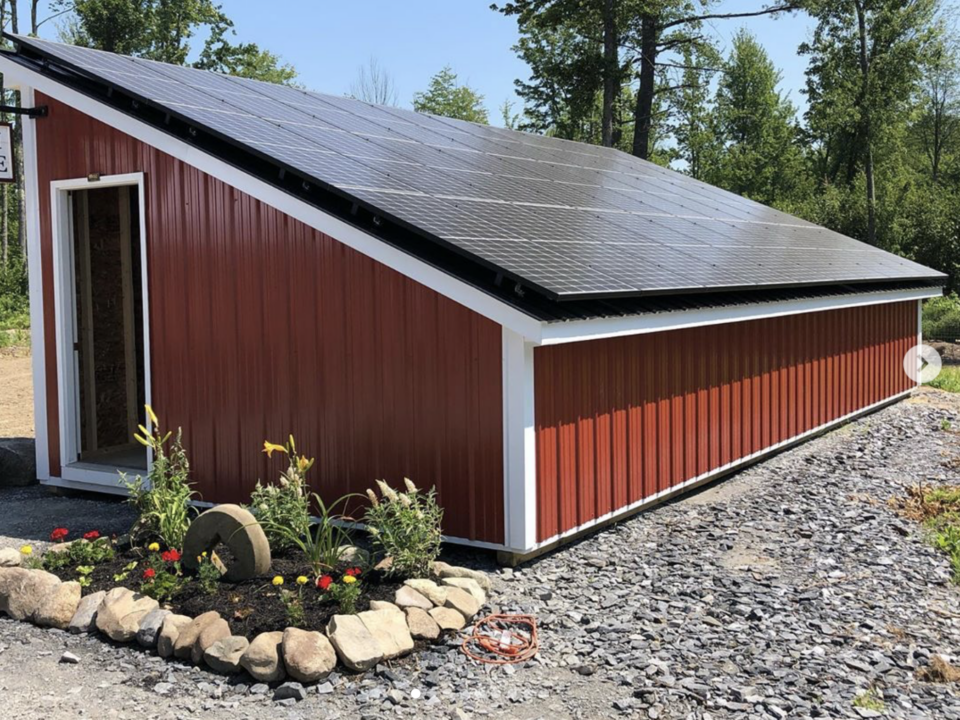
A solar shed is a purpose-built structure designed to generate electricity while also providing usable storage or workspace.
Rather than adding panels to an existing building, the structure itself is designed around the solar installation.
That offers several advantages.
Flexible placement: The shed can be located in a sunny area of the property, even if the house is shaded.
Purpose-built roof design: The roof's orientation and pitch can be selected with solar production and snow management in mind.
Additional space: Instead of dedicating part of your yard exclusively to solar panels, you gain a building that can be used for storage, a workshop, or other purposes.
Independence from your home's roof: If your house needs a new roof someday, the solar installation on the shed doesn't have to be disturbed.
Of course, a solar shed isn't the right choice for everyone. It requires sufficient space, appropriate site conditions, and an investment in the building itself.
But for homeowners who want both solar power and a functional outbuilding, it can be a compelling alternative.
Explore Maine Solar Sheds from Upright Energy.
4. Off-Grid Solar: Power Beyond the Utility Lines
Not every property in Maine has easy access to the electrical grid.
If you own a remote camp or are building somewhere without utility service, extending power lines to the property can be expensive.
An off-grid solar system offers another option.
These systems typically combine solar panels with battery storage and, in many cases, a backup generator.
The panels generate electricity during daylight hours. Batteries store energy for use when the sun isn't shining, and a generator can provide additional support during extended periods of low production.
Off-grid systems require careful planning, particularly in Maine, where winter daylight hours are shorter and seasonal electricity needs can vary.
Upright Energy's Power House is an example of this approach, combining solar generation, battery storage, and generator capability in a dedicated structure.
5. Community Solar: An Option Without Installing Panels
There's another solar option worth mentioning, even though it doesn't involve installing equipment on your property.
Community solar allows eligible electricity customers to subscribe to a share of an off-site solar project.
Depending on the program and subscription terms, participants may receive electricity bill credits associated with the project's generation.
This can be an option for renters, homeowners with unsuitable properties, or people who don't want to purchase their own solar system.
However, community solar doesn't give you ownership of the generating equipment or provide backup power at your home.
If your goal is to produce electricity on your own property, a personally owned solar installation is a different investment.
Which Solar Option Is Best for Your Maine Property?
There's no single answer that works for every homeowner.
If you have a sunny roof in good condition, rooftop solar may be the simplest approach.
If your roof isn't suitable but you have open land, ground-mounted solar could make sense.
If you want solar power and need additional storage or workspace, a solar shed may offer more value from the same area of your property.
And if you're looking to power a remote camp, an off-grid system with batteries and backup generation may be the solution.
The best place to start is by looking at your electricity use, your property, and what you want the system to accomplish.
Think Beyond the Roof
Solar technology gives Maine homeowners more flexibility than many realize.
You don't necessarily need a south-facing roof, a brand-new house, or a perfectly open backyard to explore solar power.
Sometimes the best solution is the one you haven't considered yet.
At Upright Energy, our team brings decades of Maine solar experience to the design and construction of purpose-built solar sheds and off-grid power solutions.
Want to see whether a solar shed is a good fit for your property? Take a look at our models and get in touch with our team.
Frequently Asked Questions
Do solar panels have to be installed on your roof?
No. Solar panels can be installed on rooftops, ground-mounted structures, or purpose-built buildings such as solar sheds. The best location depends on sunlight exposure, available space, installation costs, and your property's layout.
What are the different types of solar installations for homes?
Common residential solar installations include rooftop solar, ground-mounted solar, and solar structures such as solar sheds. Homeowners can also consider off-grid systems with battery storage or community solar subscriptions, depending on their electricity needs and property.
Is ground-mounted solar more expensive than rooftop solar?
Ground-mounted solar can cost more than a straightforward rooftop installation because it requires a separate support structure, site preparation, and potentially additional electrical work. However, greater flexibility in panel placement may improve electricity production on properties with unsuitable roofs.
Can a solar shed provide electricity to my house?
Yes. A properly designed solar shed can generate electricity for a home through an appropriate electrical connection or qualifying grid-connected arrangement. The amount of electricity it provides depends on the solar system's capacity, sunlight exposure, and household energy consumption.
What is the best direction for solar panels in Maine?
South-facing solar panels often provide strong annual electricity production in Maine, but east- and west-facing installations can also be effective. The ideal orientation depends on roof pitch, shading, available space, and the goals of the solar system.