Own Your Solar or Subscribe to a Solar Farm? What Maine Property Owners Should Know

Solar Shed vs. Rooftop Solar: Which Is Better for Maine?
June 30, 2026
How Many Solar Panels Do I Need to Power a House in Maine?
August 24, 2026
Own Your Solar or Subscribe to a Solar Farm? What Maine Property Owners Should Know
Updated August 2026
Community solar and owning your own solar system can both reduce what you spend on electricity, but they work very differently.
With community solar, you subscribe to a share of the electricity generated by a solar farm somewhere else in your utility's service territory. With your own solar system, you're investing in energy-producing infrastructure located on your property.
For Maine homeowners and businesses with a suitable property and the ability to make the upfront investment, owning solar can offer something a solar farm subscription cannot: a physical asset that produces electricity for you for decades.
So which makes more sense?
How Does Community Solar Work in Maine?
Community solar allows you to benefit from solar energy without installing panels on your own property.
You subscribe to a portion of the electricity generated by a larger solar project. Your share of that production generates credits that are applied to your utility bill, and you typically receive a separate bill from the community solar provider for those credits.
According to Maine's Office of the Public Advocate, community solar subscriptions are often designed to save customers approximately 10–15% compared with their normal utility costs over the course of a year.
For renters, properties without adequate sun exposure, or people who aren't ready to invest in their own solar installation, community solar can make a lot of sense.
How Is Owning Solar Different?
When you install your own solar system, you're not subscribing to someone else's generating capacity. You own the equipment producing the electricity.
A properly sized system generates electricity that can offset electricity you would otherwise purchase from the grid. Under Maine's Net Energy Billing program, excess generation sent to the grid can also generate kilowatt-hour credits that are applied against electricity usage.
Instead of receiving a discount through a subscription, you're investing in the equipment that generates the power.
That's a fundamentally different financial model.
Why Consider Owning Solar Instead of Community Solar?
You're Investing in an Asset
Community solar can lower electricity costs without requiring you to own solar equipment.
Owning solar requires a larger upfront investment, but that investment goes toward infrastructure located on your property and increases its value.
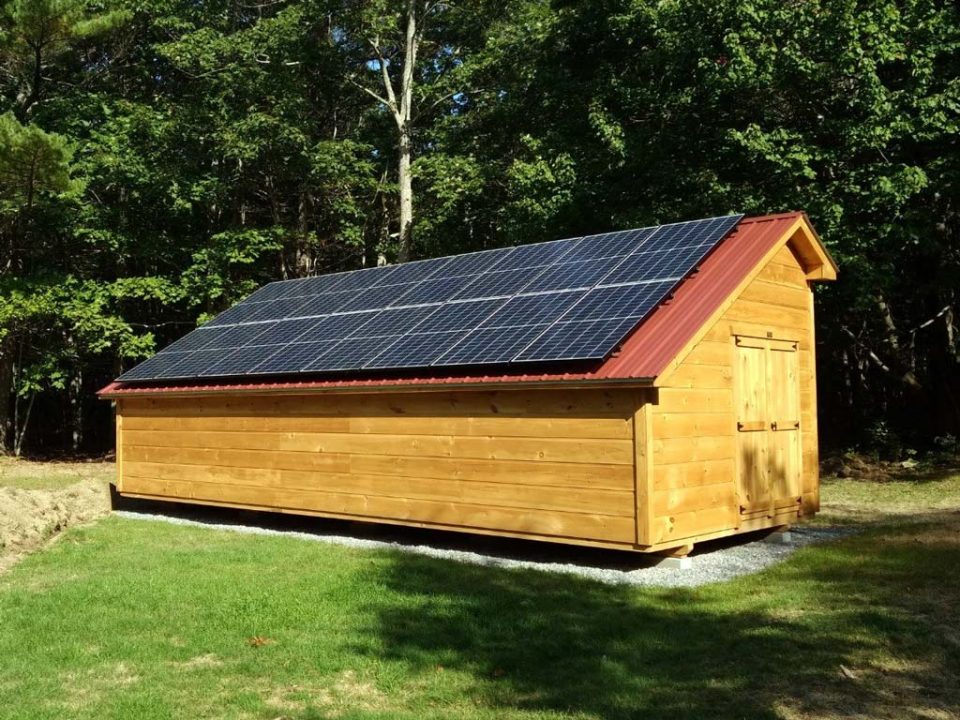
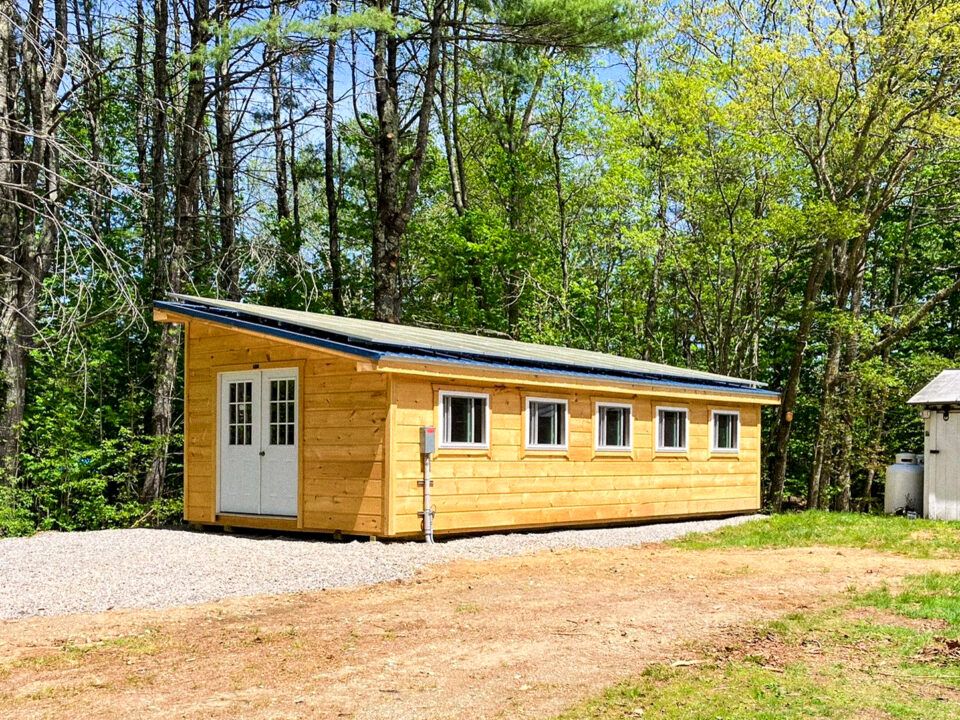
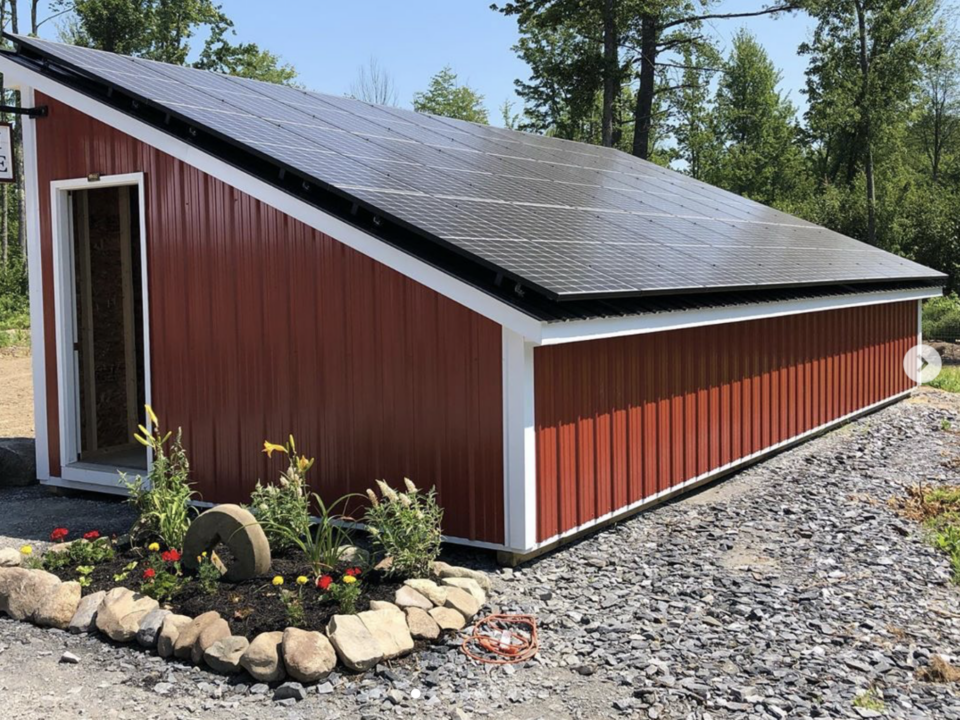
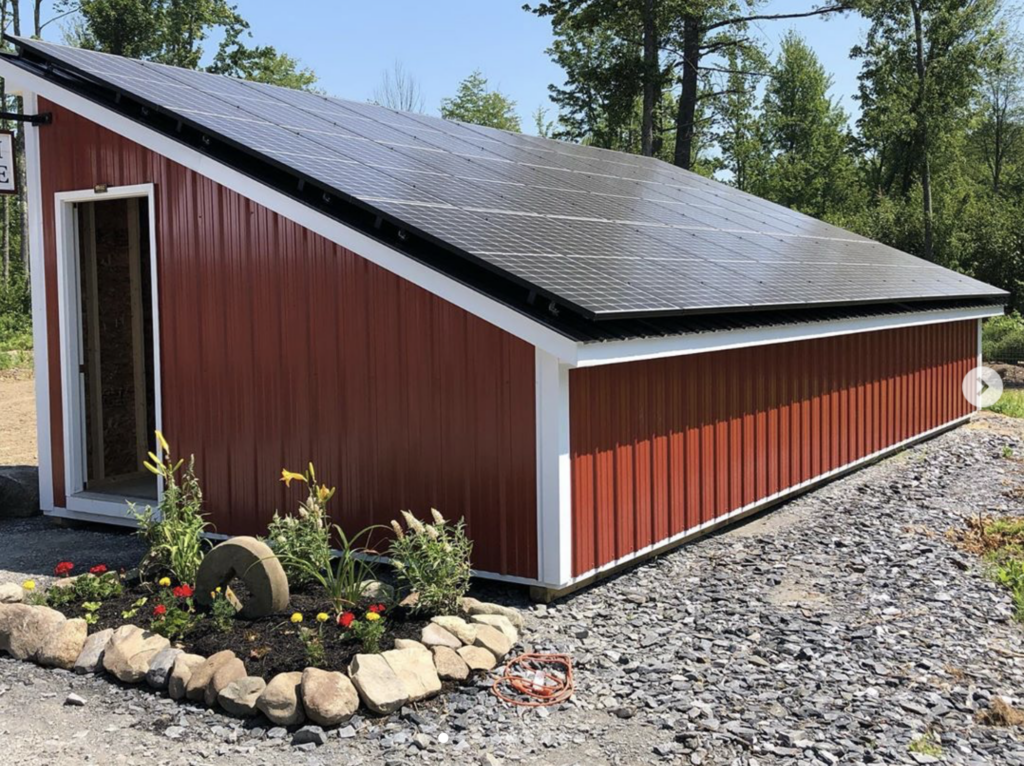
With a Maine Solar Shed, that investment does double duty: you own the solar generating system and gain a functional structure that can provide storage, workspace, equipment protection, or other usable space.
Your Long-Term Savings Potential Is Different
Community solar subscriptions are generally structured around discounts on electricity credits.
With an owned system, the goal is different: produce enough electricity over time for the accumulated savings to recover the initial investment, then continue producing electricity beyond the payback period (i.e., for free).
For example, a typical Maine Solar Shed model can produce approximately 12,800 kWh per year.
At an electricity rate of 26.37¢ per kWh, that's approximately:
12,800 kWh × $0.2637 = $3,375 in annual electricity value
A $35,000 system at that production level has a simple payback of roughly 10.4 years, before accounting for future changes in electricity rates.
After the system reaches payback, it can continue generating electricity for many years at minimal additional cost.
*Pricing, production and savings figures are estimates for illustrative purposes. Actual project cost, electricity production and savings depend on site conditions, system design, electricity usage and future utility rates. A site-specific assessment is required for an accurate quote.
What About the Convenience of Community Solar?
This is where community solar has a genuine advantage.
You don't need a sunny property, available land, construction, or a large upfront investment. That makes it accessible to people who simply aren't candidates for an owned system.
But there are tradeoffs.
Community solar customers remain subscribers rather than owners. Maine's Office of the Public Advocate advises consumers to understand their contract, billing structure, credit allocation and cancellation terms. Community solar customers generally receive both their utility bill and a separate solar-provider bill, and unused solar credits expire after one year.
Owning your own system eliminates the solar subscription relationship because the generating equipment belongs to you.
Does Owning Solar Give You More Control?
Yes, particularly over the physical system itself.
With your own installation, the system can be designed around your property's available sunlight, electricity needs and long-term plans.
A purpose-built solar shed offers even more flexibility because you're not constrained by the orientation, pitch, age or available space on your home's existing roof.
The shed can be positioned and designed specifically for solar production while creating useful space underneath it.
Is Community Solar Ever the Better Choice?
Community solar may be a better fit if you:
- Rent your home or business location
- Don't have adequate sunlight on your property
- Don't have room for an appropriate solar installation
- Don't want to own or maintain a solar system
- Aren't ready to make the upfront investment
- Expect to move in the near future
Owning solar may deserve a closer look if you own your property, have a suitable site, expect to stay there long term, and would rather invest in your own generating infrastructure than continue paying for electricity or solar credits indefinitely.
Community Solar vs. Owning Solar: What's the Biggest Difference?
The simplest distinction is ownership.
Community solar lets you purchase solar credits at a discount. Owning solar lets you invest in the equipment that generates the electricity.
Neither option is automatically right for everyone.
But if your Maine property is a good candidate for solar and you're thinking long term, it's worth comparing the lifetime economics of owning a system with the ongoing savings of a community solar subscription.
Is Your Property a Good Candidate for Owned Solar?
That's the question to answer before deciding between the two.
At Maine Solar Sheds, we look at the property, available sunlight, energy use, and your goals before recommending a system. If owning solar doesn't make sense for your site, we'll tell you.
If it does, we can show you what the numbers look like.
Start a quote to see what owning your own solar could look like on your property.
FAQ
Is owning solar better than community solar in Maine?
It depends on your property and finances. Community solar can provide savings without installing equipment, while owning solar allows you to invest in a system located on your property that can generate electricity for decades.
How much does community solar save in Maine?
Maine's Office of the Public Advocate says community solar subscriptions are often designed to save approximately 10–15% compared with normal utility costs over the course of a year. Actual savings depend on the subscription and electricity usage.
Do I own the solar panels with community solar?
Generally, no. Community solar customers subscribe to a share of the credits generated by a solar project owned by another entity.
Can I use Net Energy Billing if I own my solar system?
Yes. Maine's Net Energy Billing program allows eligible customers to participate using their own generation project as well as through shared community projects.
What is the advantage of a solar shed?
A purpose-built solar shed provides a location designed around solar production without relying on your home's existing roof. It also creates functional storage or workspace beneath the solar array.
About Maine Solar Sheds
Written by Maine Solar Sheds
Maine Solar Sheds was founded by Matt and his team, who bring over 30 years of experience in Maine's solar industry. Over the decades, they've built roof-mounted systems, concrete ground-mounted arrays, and steel ground-mounted installations across the state.
Since developing the Maine Solar Shed, Matt and his team have come to see how often a purpose-built solar structure is the best long-term solution, offering optimized solar production, snow management, durability, and additional functional space for Maine property owners.